Britain’s water industry is entering one of its most intensive periods of infrastructure investment, with utilities accelerating construction, maintenance and environmental improvement programmes. But the scale of investment brings an equally significant challenge: ensuring that billions of pounds translate into completed work, measurable improvements and better outcomes for customers.
Severn Trent’s half-year results, published on 18 November 2026, provide a useful indication of the scale of activity. The company invested £1.05 billion in capital projects during the six months to September, an increase of almost 37% compared with the previous year. It has also raised its full-year investment forecast to between £2.3 billion and £2.5 billion.
For drainage contractors, utilities and facilities management organisations, the implications extend well beyond the headline figures. As investment accelerates, the ability to coordinate engineers, specialist subcontractors, equipment and operational information efficiently will become increasingly important.
AMP8 investment is moving into delivery
The current Asset Management Period, AMP8, runs from April 2025 to March 2030 and represents a major programme of investment in water and wastewater infrastructure across England and Wales.
Severn Trent’s latest results demonstrate that substantial work is already underway. Approximately 65% of its AMP8 programme is now under contract, with the company targeting 80% by March 2027. Half of its enhancement projects are already in construction.
The company also reported £250 million in capital efficiencies during the first 18 months of AMP8, halfway towards its five-year target. These figures underline the importance of delivering infrastructure improvements while maintaining control over expenditure.
For larger contractors, this creates opportunities across sewer rehabilitation, drainage investigations, pumping station upgrades, wastewater treatment infrastructure, asset inspections and associated maintenance services.
However, winning additional work is only one part of the challenge. Organisations must also ensure they have the operational capacity to deliver increasingly complex programmes without allowing administration, scheduling problems or poor coordination to erode profitability.
The hidden complexity behind major infrastructure programmes
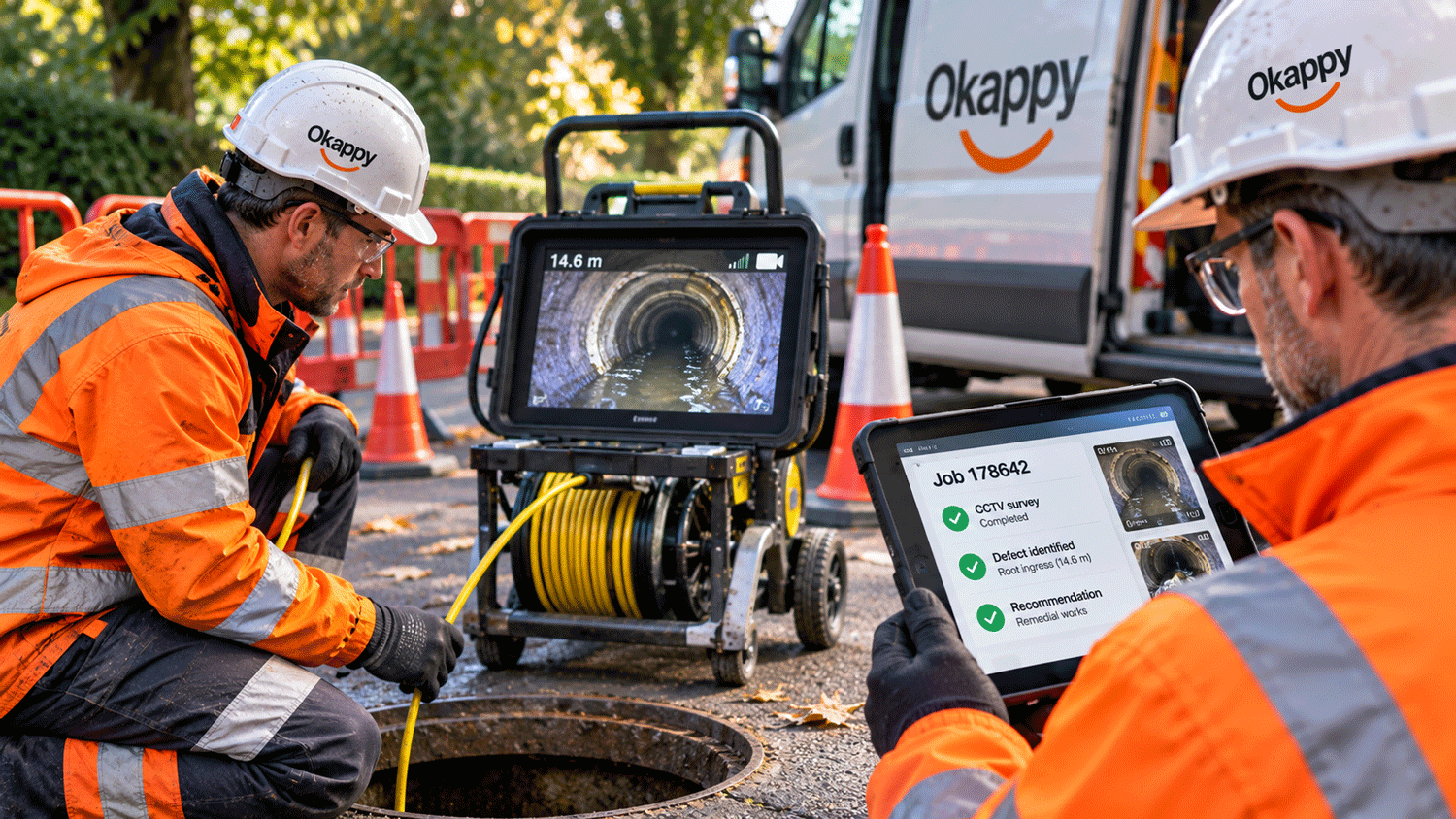
A multibillion-pound investment programme is ultimately delivered through thousands of individual activities. Before a sewer can be rehabilitated, engineers may need to undertake CCTV surveys, clean the existing network, identify structural defects and establish safe access arrangements.
Construction and remedial works can then involve specialist equipment, excavation teams, traffic management providers and subcontractors. Each activity may depend on another being completed, creating operational challenges that are not always visible in the overall project schedule.
A survey that identifies unexpected damage might require additional approval. A delayed excavation could affect the availability of specialist equipment. An engineer arriving at a site without the correct access information may be unable to complete the scheduled work.
Individually, these problems may appear relatively minor. Across hundreds of locations and thousands of jobs, however, the cumulative effect can be substantial.
This is why operational efficiency matters as much as the successful management of major contracts and construction milestones.
Why subcontractor coordination matters
Water infrastructure programmes depend on extensive networks of principal contractors, specialist subcontractors and regional service providers. Each organisation brings valuable expertise, but coordinating their activities can become increasingly difficult as workloads grow.
A principal contractor might manage the overall programme using a project-management platform, while individual drainage companies operate separate job-management systems. Engineers may receive instructions by email, submit reports through customer portals and communicate changes by telephone.
These arrangements can work for smaller volumes of activity, but they become less efficient when organisations are managing numerous contractors across different geographical areas.
The challenge is ensuring that everyone involved has access to the information required to complete their responsibilities.
Connected field-service management can help by enabling jobs, instructions, updates and completion information to move between organisations more efficiently.
Okappy has been developed around this connected approach, allowing customers, contractors, subcontractors and employees to exchange jobs and operational information through a shared network.
For larger organisations, this can reduce duplicated administration and improve visibility across complex supply chains.
Turning operational efficiency into financial savings
Severn Trent’s reported capital efficiencies highlight the importance of controlling delivery costs. While these savings reflect a broad range of commercial, engineering and operational initiatives, effective field-service management can contribute to similar objectives at contractor level.
Consider a drainage business managing 200 engineers and subcontractors. If each operative loses just 15 minutes per working day because of incomplete instructions, unnecessary telephone calls or avoidable administration, that represents approximately 50 hours of productive time lost across the workforce every day.
Over 220 working days, this equates to 11,000 hours annually.
Not all of this time can necessarily be recovered, but the example illustrates why relatively small operational improvements can have a significant cumulative impact.
Better scheduling, clearer job instructions, mobile reporting and more efficient communication can help organisations reduce wasted journeys, avoid unnecessary repeat visits and spend less time manually transferring information between systems.
The objective is not simply to make individual engineers work faster. It is to remove avoidable friction from the processes surrounding their work.
Measuring delivery rather than activity
Large infrastructure customers increasingly need evidence that investment is delivering meaningful improvements.
Severn Trent reported a 44% year-on-year reduction in total pollution incidents using its stated comparison measure, alongside a 53% reduction in repeat wastewater customer contacts. It also expects to meet its 2026 regulatory target of no more than 18 average spills per storm overflow.
These are company-reported results, but they illustrate the distinction between completing activities and achieving outcomes.
For drainage contractors, this means that the number of jobs completed may not always be the most useful measure of performance. Customers may also want to understand whether recurring defects have been resolved, whether maintenance has improved asset reliability and whether recommendations identified during inspections have been addressed.
Reliable job records, asset histories and consistent reporting can help contractors demonstrate the contribution their work makes to wider operational objectives.
The opportunity for AI and automation
As operational programmes expand, artificial intelligence offers further opportunities to reduce administrative overhead.
AI agents could potentially interpret incoming work requests, prepare jobs for allocation, summarise engineer findings and help operations teams identify outstanding activities.
For example, a contract manager might need to establish which inspections have identified remedial work that has not yet been scheduled. Traditionally, answering that question could require reviewing numerous reports and contacting several contractors.
With structured operational information, AI could help retrieve and summarise relevant records, allowing managers to focus on decisions rather than manual information gathering.
Okappy is developing AI capabilities to support job capture, scheduling and administrative workflows. These technologies could help organisations handle increasing volumes of work without a corresponding increase in office administration.
However, their effectiveness will depend on accurate operational data and processes that connect the people and organisations responsible for delivering work.
Preparing for the next phase of investment
Severn Trent’s investment programme also extends beyond AMP8. In July 2026, the company announced market engagement for capital design and delivery frameworks potentially covering up to £25 billion of investment over the following eight to fifteen years. This is a framework opportunity rather than a commitment of additional expenditure.
For drainage contractors, the longer-term message is significant. Infrastructure investment will continue to create opportunities, but customers will increasingly expect contractors to demonstrate efficient delivery, reliable reporting and the ability to coordinate complex operations.
Businesses that invest in their operational capabilities now may be better positioned to support larger contracts and long-term infrastructure programmes.
From investment commitments to completed work
The water industry’s investment ambitions are substantial, but funding alone will not deliver the required improvements. Success will depend on how effectively organisations translate major programmes into thousands of individual jobs completed safely, efficiently and to the required standard.
For larger drainage contractors, that means improving scheduling, connecting subcontractors, maintaining accurate operational records and making better use of the information collected during everyday work.
The organisations that succeed will not simply be those capable of winning larger contracts. They will be those capable of delivering more work, with greater visibility and control, without allowing operational complexity to grow at the same rate.