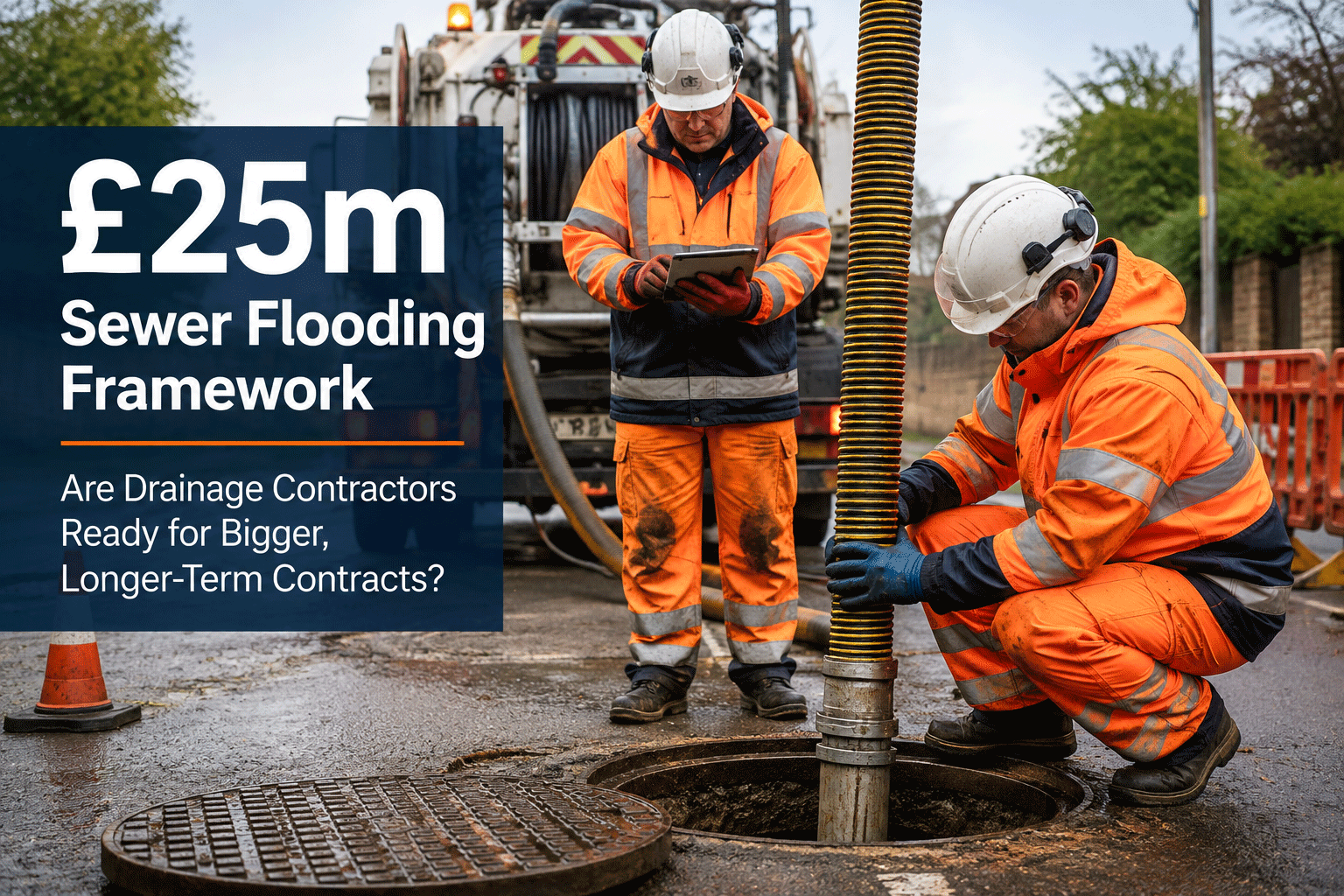
The scale of opportunity emerging from AMP8 continues to become clearer. This week, United Utilities went to tender for a new Sewer Flooding Mitigation Framework worth approximately £24.9 million. The framework is expected to run from November 2026 until March 2030, but extension options could take it all the way through to 2040.
Perhaps more interestingly for the drainage industry, United Utilities intends to appoint a single supplier responsible for the entirety of the requirements. That highlights an important trend for larger drainage contractors. As water companies invest billions in improving wastewater infrastructure, reducing pollution and tackling sewer flooding, they increasingly need supply-chain partners capable of taking responsibility for substantial programmes of work.
Winning these contracts requires more than drainage expertise. Contractors also need the operational infrastructure to manage large volumes of work, coordinate employees and subcontractors, meet service levels and demonstrate exactly what has been delivered.
AMP8 opportunities are reaching the supply chain
The United Utilities tender is just one example of the amount of work now moving into delivery. Anglian Water’s £1.5 billion Major Projects Framework, covering major water and wastewater schemes.
Thames Water has awarded Costain around £150 million of wastewater treatment upgrades across 15 sites, including inlet station upgrades and improvements to storm tank resilience. It has also awarded Galliford Try a £47.5 million contract to upgrade Camberley Sewage Treatment Works.
These headline contracts typically go to major infrastructure companies. But underneath them sits a much larger ecosystem of specialist suppliers. Drainage contractors may provide CCTV surveying, sewer cleaning, jetting, rehabilitation, pumping, tankering, inspections, emergency response and specialist maintenance.
That creates substantial opportunities. It also changes the operational requirements placed on those businesses.
Bigger contracts mean bigger operational responsibilities
Imagine winning a contract which increases your workload by 30%.
Initially, that sounds excellent. But what happens operationally?
- Thirty per cent more customer requests need processing.
- Thirty per cent more jobs need scheduling.
- More engineers need coordinating.
- More subcontractors may be required.
- More job sheets need reviewing.
- More evidence needs checking.
- More invoices need raising.
If administration increases at the same rate as revenue, the contract may not be as attractive as it first appears.
This is one reason operational scalability becomes increasingly important as drainage organisations grow. The objective should be to increase the amount of work the business can process without increasing administration at the same rate.
The subcontractor challenge
Large drainage contracts frequently require a mixture of directly employed engineers and specialist subcontractors. Subcontractors provide flexibility, specialist capabilities and geographical coverage. But they can also create an operational blind spot.
- A job arrives from the customer.
- The main contractor allocates it to a subcontractor.
- The subcontractor sends it to an engineer.
- Someone completes the work.
- Eventually a worksheet, photographs and invoice make their way back.
In between those stages, the organisation responsible to the customer may have surprisingly little visibility. Where is the engineer? Has the job started? Has a problem been identified? Is additional work required? Will the SLA be met? Has the customer been updated?
At low volumes, operations teams can chase these answers manually. At thousands of jobs per month, that becomes much harder.
Connected operations provide a different model
Rather than treating each organisation within the supply chain as a separate information silo, connected job management allows work to flow electronically between organisations.
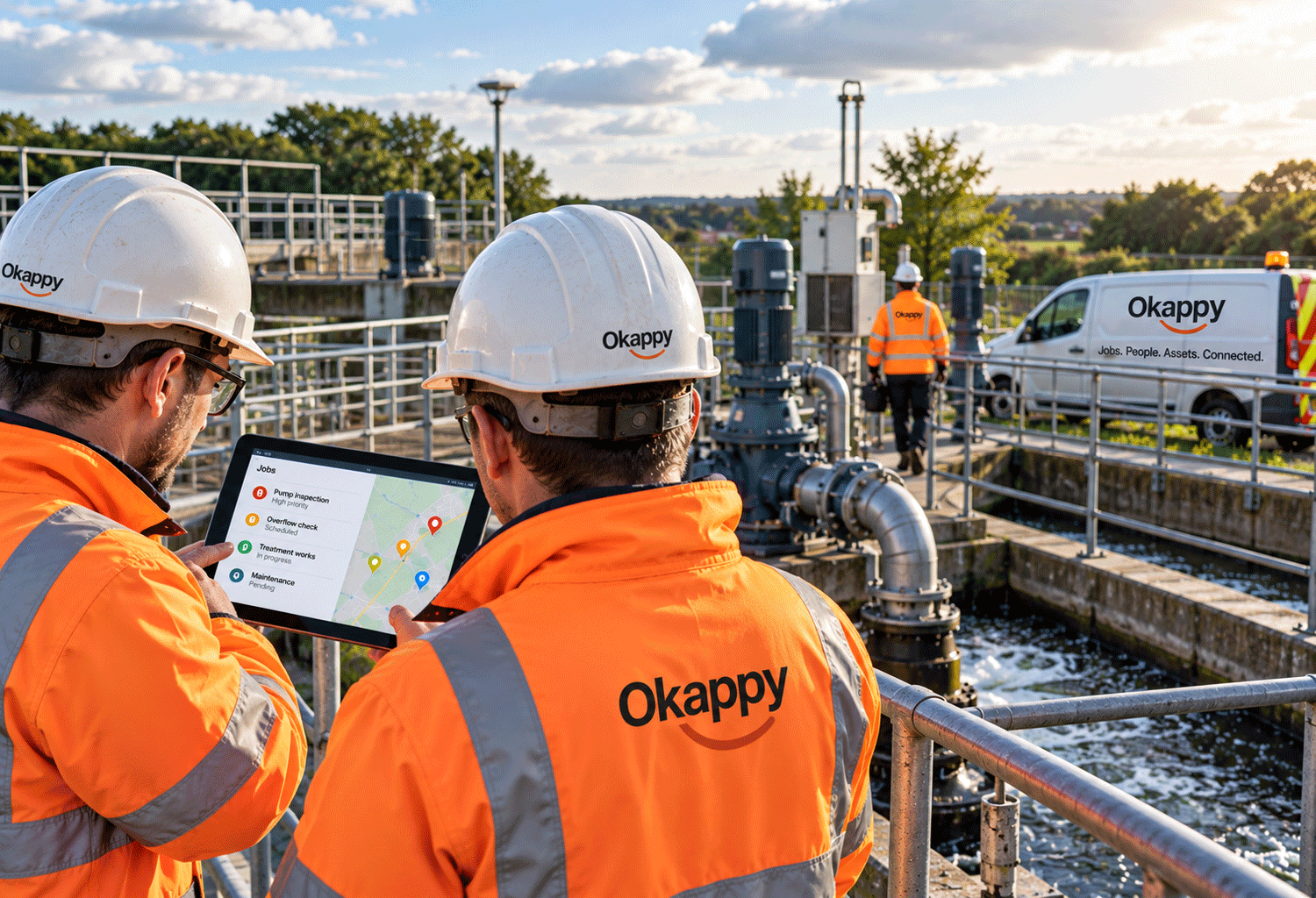
A customer can send a job to its contractor. The contractor can allocate it internally or pass it to a subcontractor. The subcontractor can allocate it to an engineer. Status updates and information can then flow back through the same network.
Everyone retains control of their own organisation, but the relevant parties maintain visibility of the job. For larger contracts, this can fundamentally change how subcontractors are managed. Instead of continually asking for updates, managers can see what is happening.
Evidence is becoming as important as completion
The need for visibility is reinforced by increasing regulatory scrutiny.
Earlier this year, the Environment Agency reported completing more than 10,000 inspections of water company assets, including treatment works, sewage pumping stations and storm overflows. Those inspections identified more than 3,000 permit condition breaches. The government has also introduced faster civil penalties of up to £500,000 for environmental breaches.
Meanwhile, Southern Water was fined £7.1 million in July following five pollution incidents. The Environment Agency highlighted preventable equipment failures, inadequate maintenance and delays in reporting pollution.
For contractors working within this environment, marking a job as “complete” is increasingly insufficient. Customers may need to know:
- Who attended?
- When did they arrive?
- What did they inspect?
- What did they find?
- What work was completed?
- Were the required checks carried out?
- Were photographs captured?
- Was additional work recommended?
- Was that recommendation subsequently actioned?
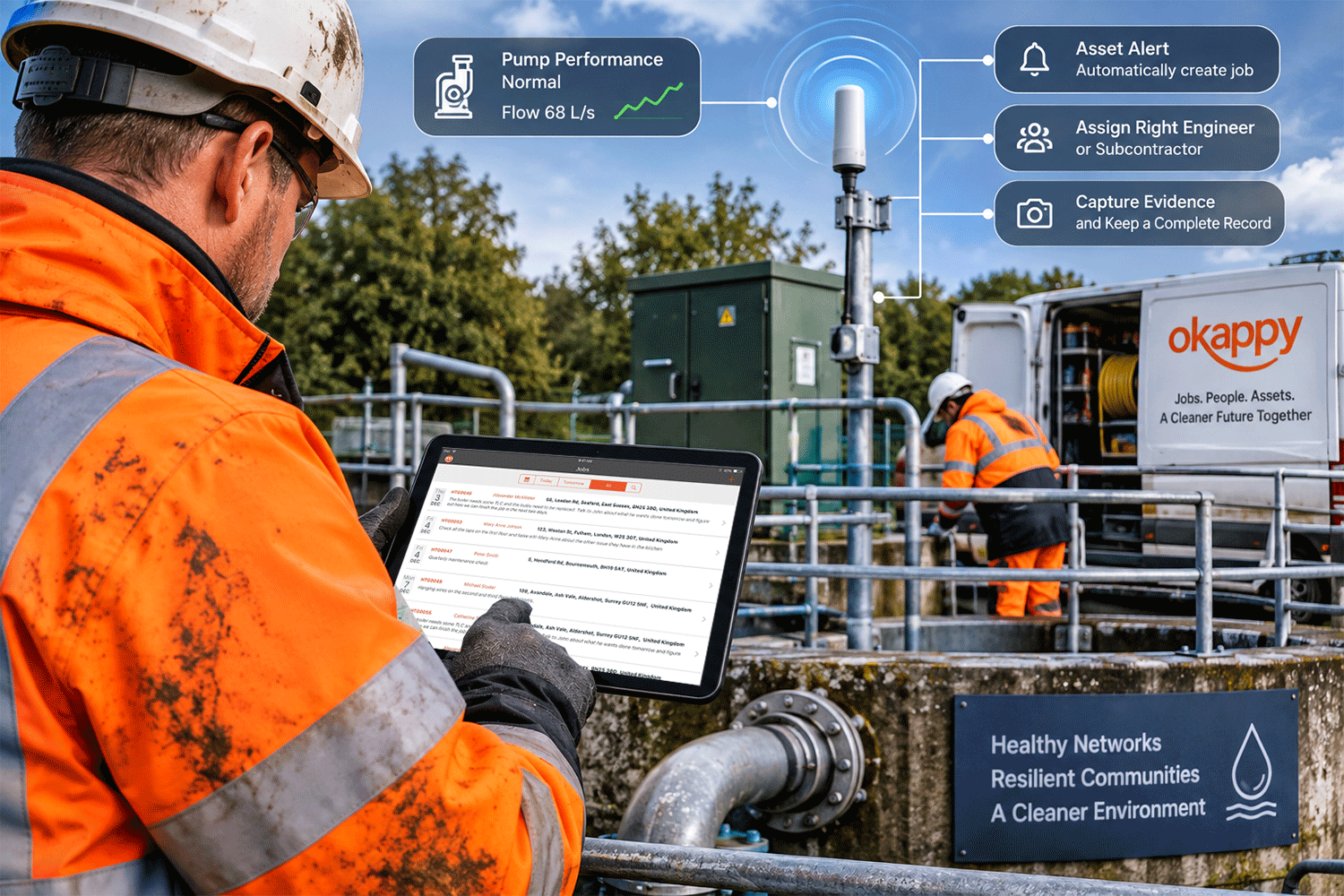
That information needs to be captured as part of the operational workflow.
Managing by exception
There is another important difference between small and large operations. A manager overseeing 30 jobs can potentially know what is happening with almost every job. An Operations Director responsible for 3,000 jobs cannot. They need to manage by exception.
Which jobs haven’t been accepted? Which are approaching their SLA? Which have failed an inspection? Which require follow-up work? Which subcontractors are underperforming? Which completed jobs haven’t been invoiced?
The role of technology is increasingly to identify these exceptions rather than simply provide somewhere to store job information.
AI adds another layer of automation
This is also where artificial intelligence can have a practical role within drainage operations.
Many administrative processes remain repetitive. Customer emails need reading. Jobs need creating. Information needs extracting. Engineers need scheduling. Completed jobs need reviewing. Invoices need preparing.
AI agents can increasingly assist with these activities.
For example, an AI agent could identify a job request within an incoming email and create a draft job automatically. Another could help identify suitable engineers. A finance agent could identify completed jobs ready for invoicing.
The objective isn’t to remove people from the process. It is to allow people to concentrate on the situations requiring judgement while software handles more routine administration.
Operational systems are becoming part of the tender proposition
For larger drainage organisations, there is also a commercial implication.
When bidding for substantial frameworks, prospective customers want confidence that the contractor can actually control the work. Being able to demonstrate digital job allocation, real-time status information, structured checksheets, photographic evidence, subcontractor visibility and comprehensive audit trails therefore becomes part of the proposition.
Operational technology stops being simply an internal efficiency tool. It helps demonstrate delivery capability.
Could you cope with winning the contract?
The £24.9 million United Utilities sewer flooding framework is another sign of the scale of opportunity emerging from AMP8.
For drainage businesses with the expertise and ambition to pursue larger contracts, the next few years could provide substantial opportunities for growth. But growth creates its own risks.
Before bidding for the next major framework, it is worth asking a simple question:
If we won significantly more work tomorrow, could our existing processes cope?
Could you allocate the work efficiently? Could you manage additional subcontractors? Could you give the customer real-time visibility? Could you demonstrate compliance? Could you invoice promptly? And could your management team remain in control without simply employing significantly more administrative staff?
Platforms such as Okappy help connect customers, office teams, employees and subcontractors within the same operational workflow, providing the visibility required to manage work across organisational boundaries.
As AMP8 moves further into delivery, that capability could become increasingly important. Because winning a large drainage contract is only the beginning.
The real challenge is demonstrating that your organisation can deliver it at scale.