The UK’s wastewater industry is under increasing pressure to demonstrate not just that work has been completed, but that every stage of the process can be properly accounted for. From industrial waste entering sewer networks to drainage contractors collecting and transporting liquid waste, organisations are facing growing expectations around transparency, environmental performance and operational control.
A new investigation published by the Guardian on 9 October has highlighted the scale of industrial wastewater entering Britain’s sewage treatment infrastructure. According to the investigation, UK water companies generated more than £340 million in revenue from industrial and commercial wastewater last year, with approximately 26,000 trade-effluent consents covering potential annual discharges of up to 608 billion litres.
The investigation also raised concerns about the ability of conventional sewage treatment facilities to remove certain industrial chemicals and the limited transparency surrounding the trade-effluent consenting system.
For larger drainage contractors, facilities management companies and water utilities, the story raises a broader operational question: how much visibility do organisations really have over the work being undertaken across their networks and supply chains?
A complex network of organisations and responsibilities
Managing wastewater is rarely the responsibility of a single organisation. Industrial businesses generate waste, specialist contractors maintain drainage systems, tankering companies transport liquid waste, and water companies operate the networks and treatment facilities.
Each organisation may have its own systems, processes and reporting requirements. A national drainage contractor might be managing thousands of jobs across hundreds of customer sites, using a combination of employed engineers, regional subcontractors and specialist service providers.
The challenge becomes particularly significant when work passes between organisations. A customer raises a request, a contractor allocates the job, a subcontractor attends the site and another company may be responsible for transporting or receiving waste.
Without connected systems, information can become fragmented across emails, spreadsheets, paper job sheets and separate databases. This makes it difficult to establish a complete picture of what happened, who was responsible and whether the required procedures were followed.
Understanding where the waste goes
One of the important distinctions highlighted by the recent investigation is the difference between domestic sewage and trade effluent.
Trade effluent generally refers to liquid waste produced by industrial or commercial activities and discharged into public sewers. Under the Water Industry Act 1991, businesses normally require consent from the relevant sewerage undertaker before making these discharges.
These consents can specify conditions covering discharge volumes, composition, timing and other characteristics. Water companies are responsible for administering and enforcing them.
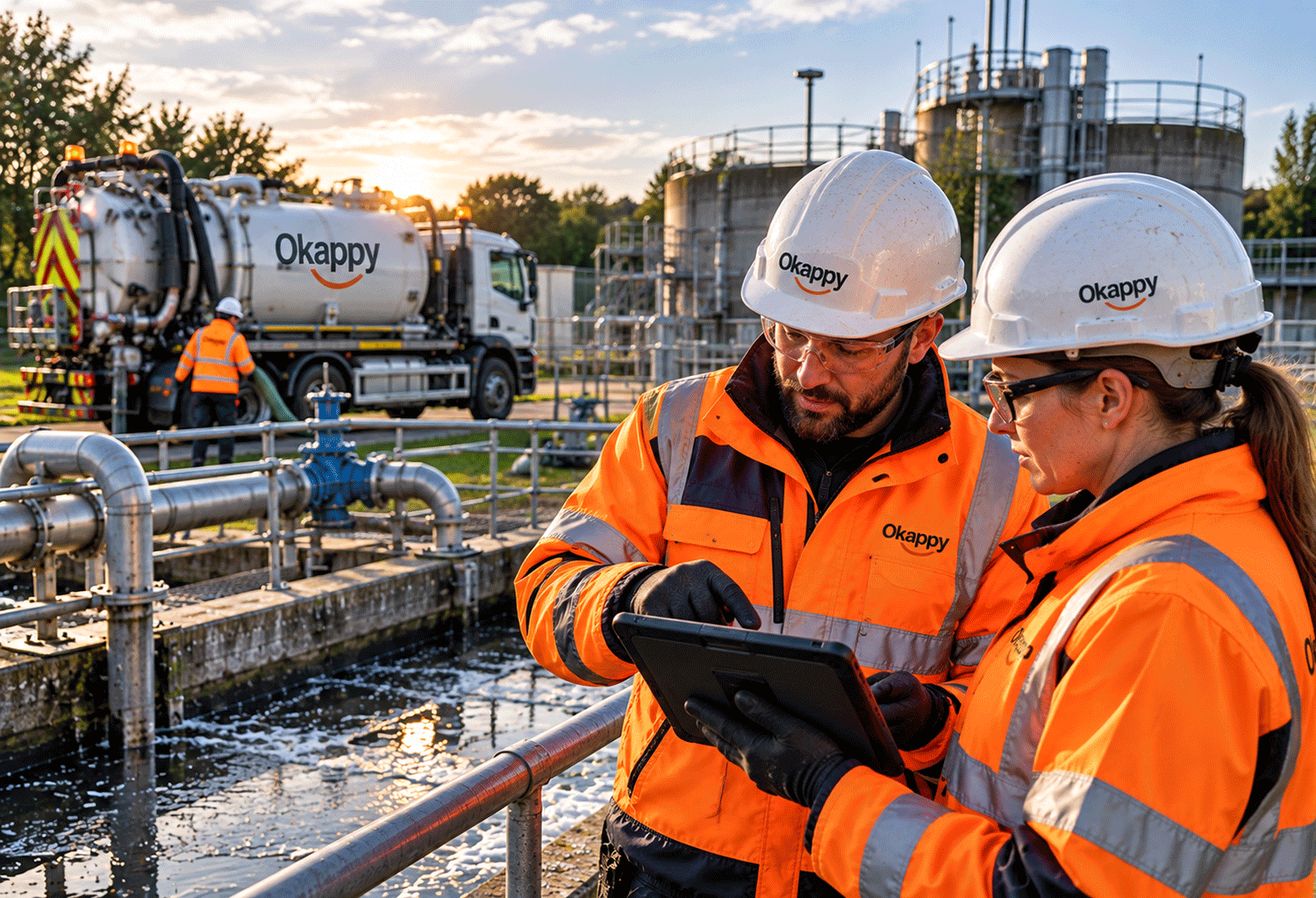
Separately, specialist waste contractors may collect and transport liquid waste by tanker, subject to the applicable waste-management requirements.
For organisations involved in these activities, accurate operational records are essential. They need to know which sites have been attended, what work was undertaken, what material was handled and whether the relevant documentation has been completed.
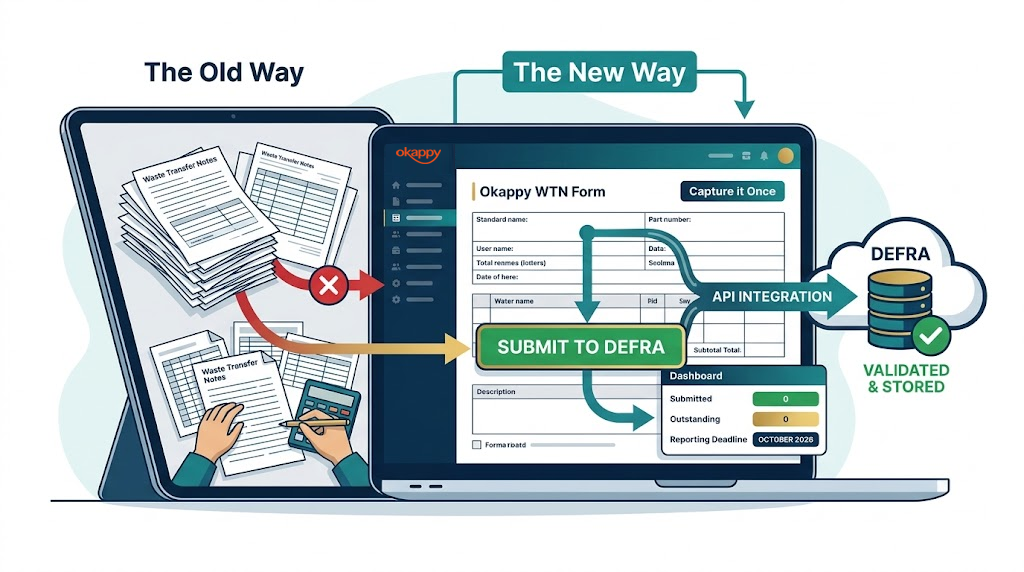
A field-service platform cannot replace regulatory consents, statutory waste-transfer documentation or specialist waste-tracking systems. However, it can provide an important operational record connecting the people, jobs, assets and organisations involved.
Why larger organisations struggle with visibility
Consider a national drainage contractor responsible for maintaining drainage infrastructure across 500 commercial properties.
The company might undertake planned inspections, emergency blockage clearance, CCTV surveys, pumping station maintenance, interceptor cleaning and reactive repairs. Some jobs are completed by employed engineers, while others are allocated to specialist subcontractors.
At any given moment, hundreds of jobs could be progressing simultaneously.
An Operations Director needs to understand whether engineers are attending within agreed service levels, whether work has been completed satisfactorily and whether any outstanding issues require attention.
But they may also need to demonstrate that appropriate checks were carried out, that photographic evidence was collected and that recommendations identified during inspections were followed up.
If that information is distributed across several disconnected systems, producing a reliable operational picture becomes unnecessarily difficult.
The problem is not necessarily that information is missing. Often, it exists somewhere within the organisation but is difficult to retrieve, verify or connect to the relevant activity.
From completing jobs to demonstrating compliance
Recent regulatory developments reinforce the importance of effective operational management.
In September, Ofwat published findings from its investigation into Albion Water, identifying concerns relating to wastewater treatment performance, maintenance, management resources and record keeping.
The regulator proposed accepting enforceable undertakings designed to improve operational management, asset reviews, sampling and governance, subject to consultation.
Although regulatory compliance involves considerably more than job management, the case illustrates why maintaining reliable records and demonstrating that operational processes are being followed is increasingly important.
For drainage contractors working with larger customers, this creates an opportunity to differentiate themselves.
Instead of simply confirming that a job has been completed, contractors can provide a structured record showing when the work was allocated, who attended, what was found, what evidence was captured and whether further action was recommended.
This information can be particularly valuable when dealing with environmental incidents, customer complaints, contract reviews or regulatory enquiries.
Connecting the entire supply chain
One of the limitations of traditional job-management systems is that they often focus on a single organisation.
However, larger drainage operations increasingly depend on networks of contractors and subcontractors working together.
A facilities management company might appoint a national drainage contractor, which then uses regional specialists to deliver the work. Each business has its own responsibilities, but the customer still expects consistent service and visibility.
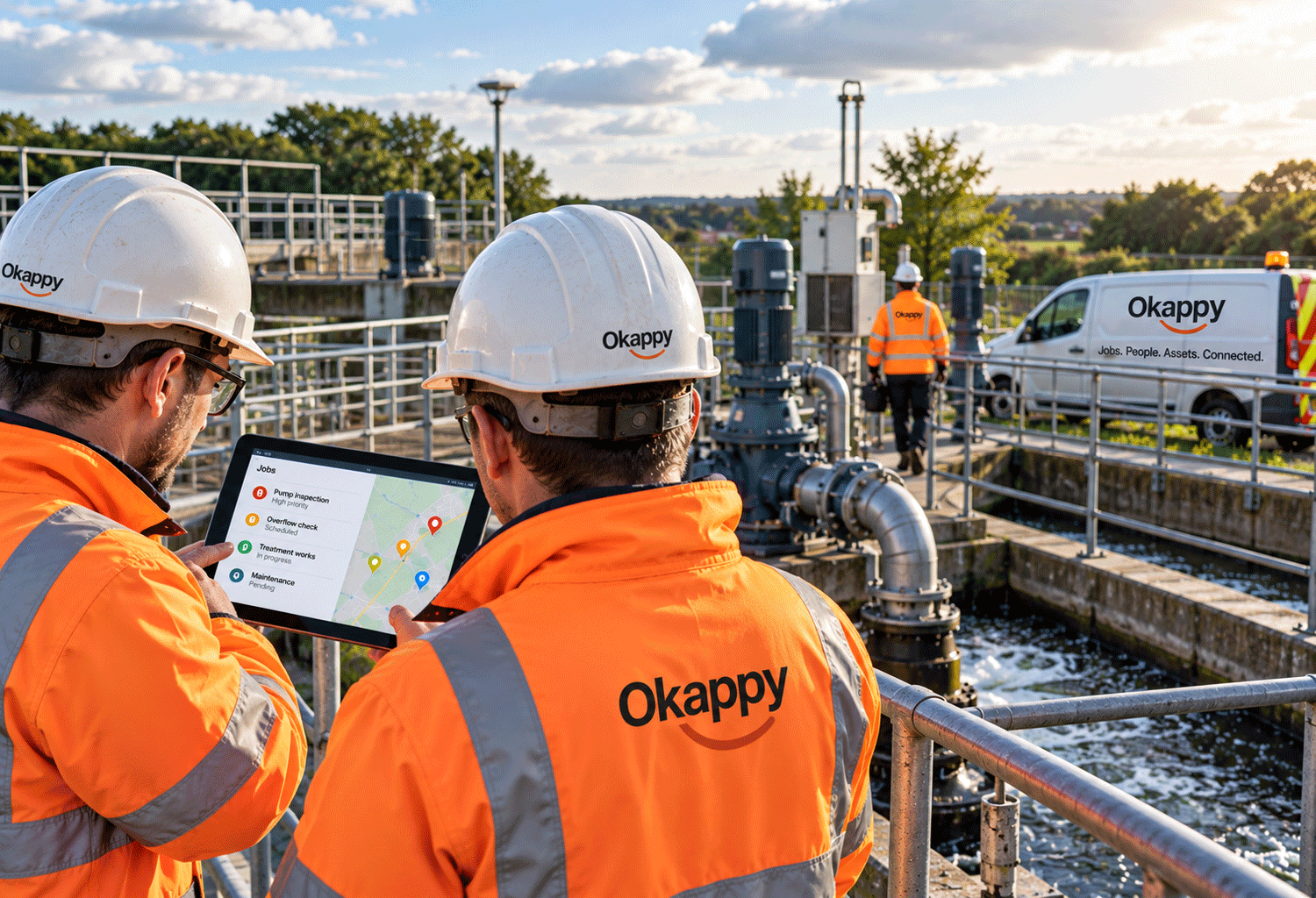
Okappy approaches this differently by connecting customers, contractors and subcontractors through a shared network.
Rather than relying entirely on separate systems and repeated requests for updates, organisations can exchange jobs and see their progress through the operational chain.
This means a contractor can allocate work to a subcontractor while maintaining visibility of its status. The customer can receive updates without every organisation having to duplicate the same information.
For larger businesses managing extensive subcontractor networks, this can reduce administration while improving accountability.
How AI can improve operational oversight
Artificial intelligence offers another opportunity to improve the management of drainage operations, particularly where organisations generate large volumes of unstructured information.
An engineer completing a CCTV survey might identify a deteriorating pipe and recommend further investigation. Another might record evidence of repeated blockages at a commercial site.
Traditionally, those observations could remain buried within completed job sheets until somebody manually reviewed them.
AI can potentially identify recommendations, recognise recurring problems and help create follow-up actions. It can also assist with processing incoming emails, interpreting job descriptions and identifying information that requires attention.
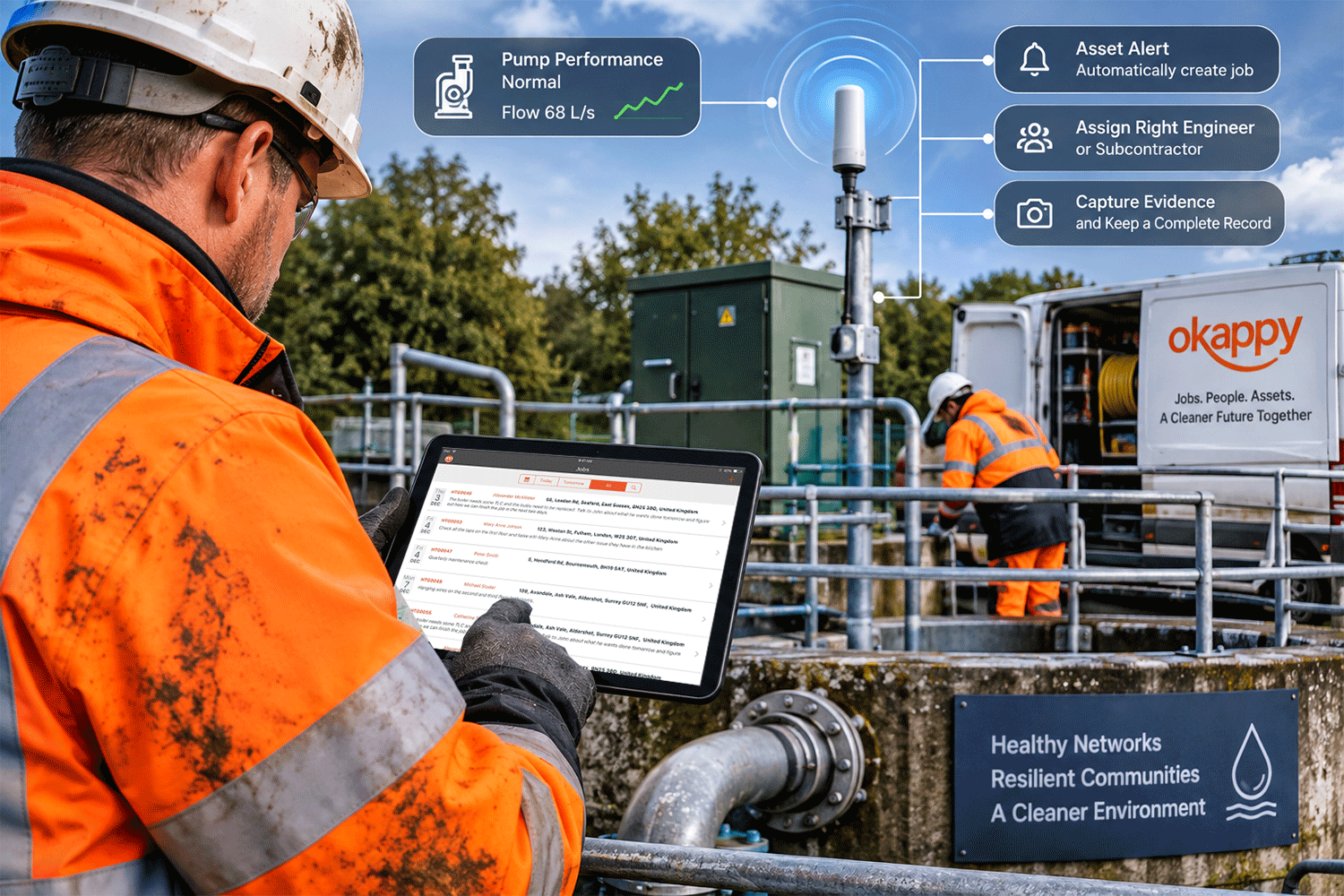
Within Okappy, AI agents and integrations are increasingly being used to streamline activities such as creating jobs, querying operational information, scheduling engineers and producing job documentation.
The important point is that AI should complement a reliable operational system rather than replace it.
An AI agent might recognise that an engineer has identified a potentially serious problem, but the organisation still needs a structured process for assigning responsibility, completing the work and recording the outcome.
The commercial opportunity for drainage contractors
The implications extend beyond environmental compliance.
Larger customers increasingly want contractors who can demonstrate consistent service delivery across multiple sites and regions.
They want visibility of outstanding work, confidence that service levels are being met and access to reliable information when problems arise.
For contractors competing for national frameworks or major facilities management contracts, the ability to provide this level of transparency can become an important differentiator.
It also creates opportunities to improve internal efficiency. Connected workflows can reduce duplicate data entry, minimise time spent chasing subcontractors and help managers identify jobs requiring intervention.
As organisations grow, these efficiencies become increasingly valuable.
Building trust through better information
The latest investigation into industrial wastewater highlights the complexity of the systems responsible for managing one of the country’s most important environmental challenges.
Addressing concerns about wastewater pollution will require appropriate regulation, investment in infrastructure, effective treatment processes and improved environmental monitoring.
But operational transparency also has an important role to play.
For drainage contractors, water utilities and facilities management organisations, the starting point is ensuring that work is properly recorded, information can move between organisations and responsibilities remain clear throughout the process.
The organisations best positioned for the future will not necessarily be those collecting the most data, but those able to demonstrate what happened, why it happened and what action was taken.
That is where connected field-service management can make a meaningful difference.