A stolen van leaves more than an empty parking space. It can take tomorrow’s tools, this afternoon’s parts and a carefully planned working day with it.
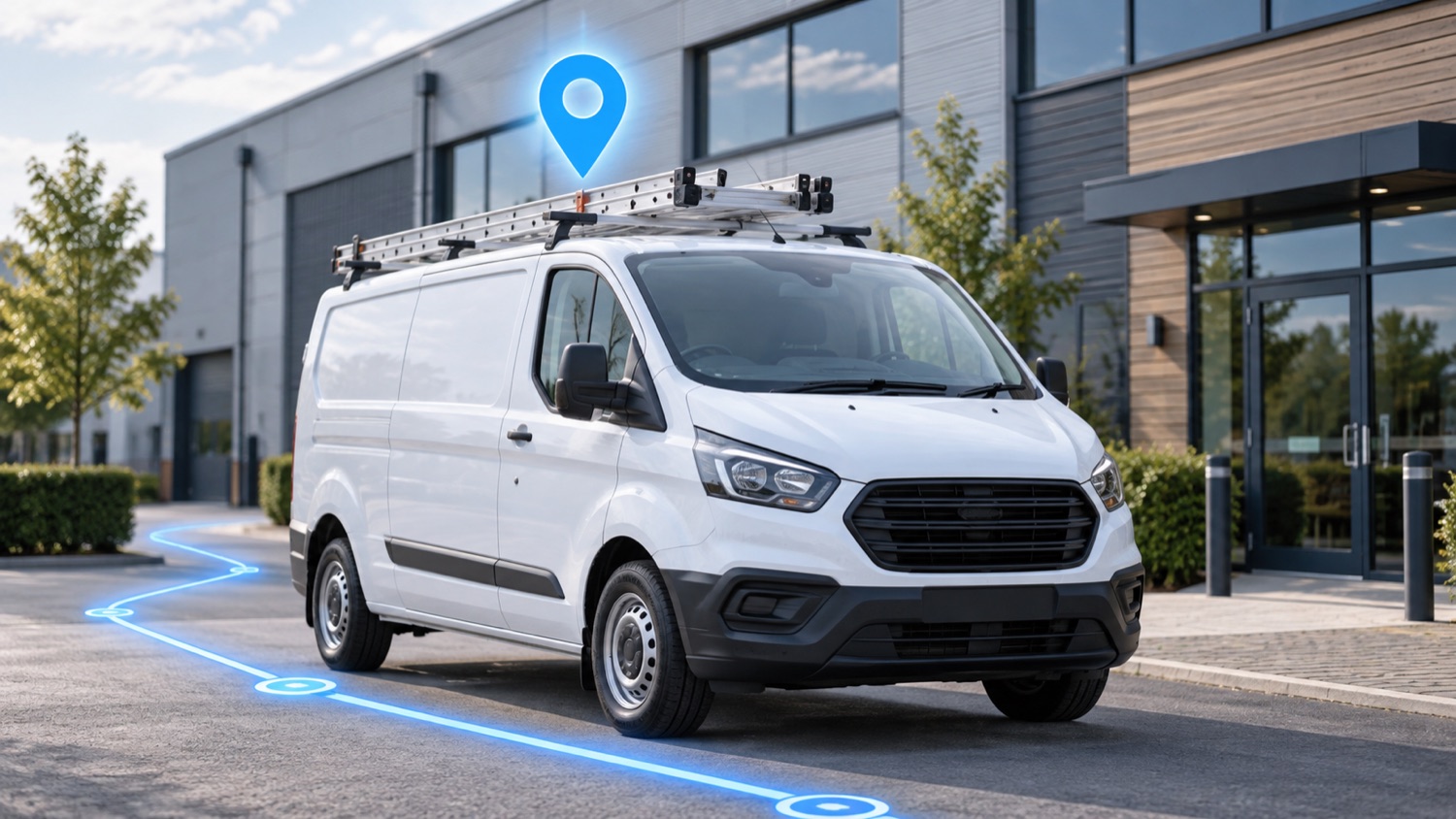
For drainage contractors, facilities managers, construction firms and utilities teams, vehicle tracking deserves a place in both the security conversation and the daily running of the business. A recent Autocar investigation into stolen-vehicle recovery highlights just how valuable dedicated tracking can be when something goes wrong. But for a field service business, location data can also make life easier every day.
Whey vehicle tracking matters when a vehicle is stolen
Recent figures put the recovery problem into perspective. The Office for National Statistics’ original vehicle-related theft tables from the Crime Survey for England and Wales shows that nearly three quarters of stolen vehicles were not returned to their owners. While those figures relate to household vehicles rather than commercial fleets, they demonstrate just how difficult recovering a stolen vehicle can be once it disappears.
The Autocar report on stolen-vehicle recovery shows why dedicated tracking can make a difference. It reports recovery rates of between 95% and 99% from providers of professionally monitored aftermarket tracking systems. Thatcham Research also warns that experienced thieves often know how to disable manufacturers’ factory-fitted connected technology, while recovery specialist Inn-Track says more than 90% of the vehicles it recovers have already had their factory-installed connected technology compromised or disconnected.
That doesn’t mean fitting a tracker guarantees you’ll get a stolen vehicle back. But it does underline the value of having a separate, harder-to-find means of locating it. And for a field service business, recovering the vehicle can be only part of the story.
For a service business, the van is only part of the loss
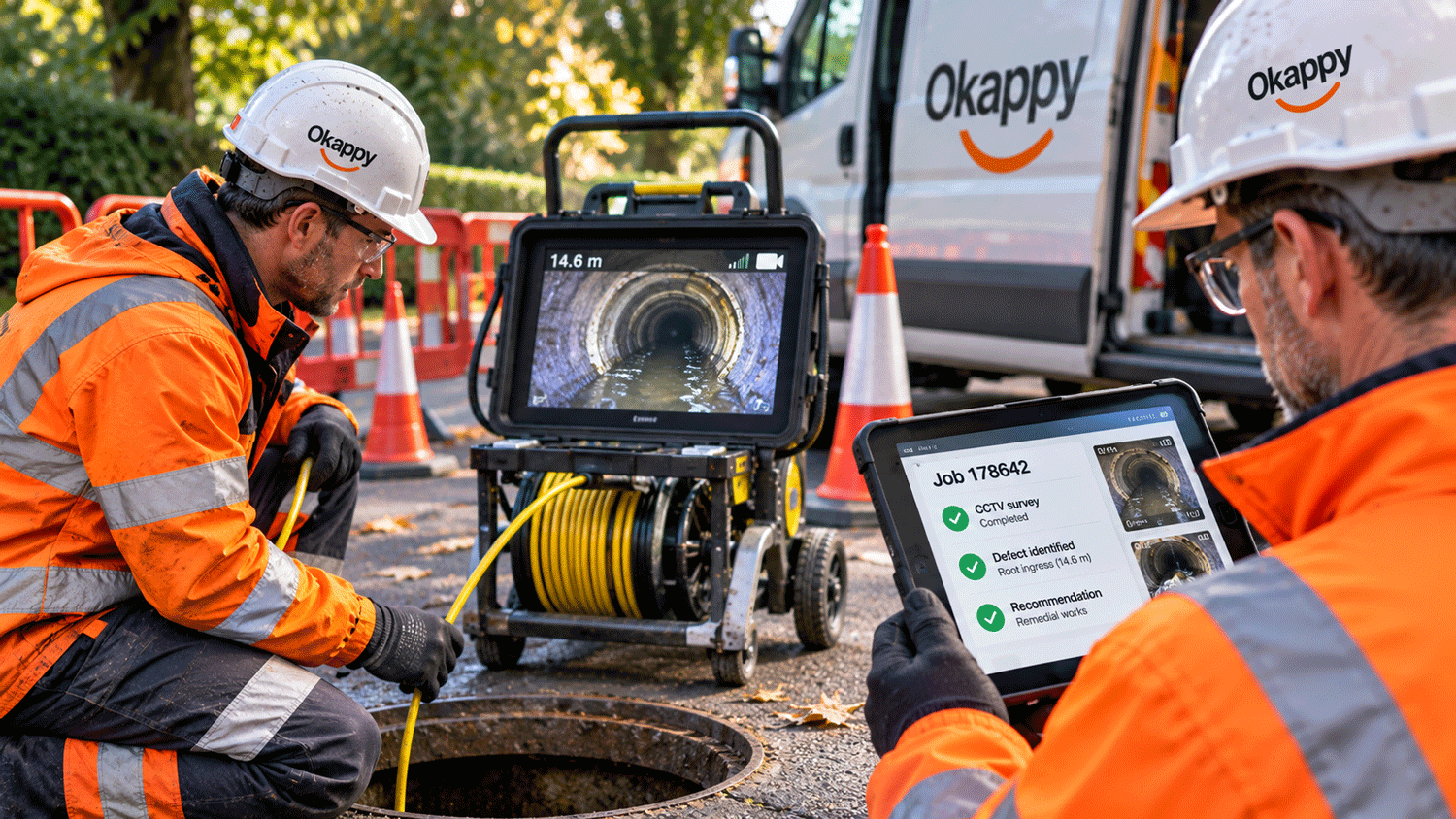
For a field service company, the cost of vehicle theft rarely stops at the vehicle. A working van might contain drain inspection cameras, power tools, testing equipment, specialist fittings and parts already allocated to today’s jobs. Take the van away and you can lose the engineer’s ability to work as well.
If those disappear too, the consequences can spread across the business:
- Replacement costs: finding another vehicle is only the start; the equipment needed to make it useful may take longer to replace.
- Engineer downtime: a skilled person without the right kit cannot simply carry on as normal.
- Cancelled or rescheduled jobs: other teams inherit the work, often with extra travel and overtime.
- SLA disruption: a missed response window can affect service-level commitments, particularly on urgent drainage or facilities call-outs.
- Unhappy customers: explaining the theft does not unblock their drain or restore their building services.
Not all tracking is the same
Tracking is one layer in a wider security approach. But other factors should be considered.
Deterrence is about making a theft less attractive or harder to attempt: secure parking, appropriate locks and sensible storage routines matter.
Detection is about noticing a problem promptly. Depending on the system and service, location information or movement alerts may help identify unexpected use. Check which alerts exist, who receives them and what happens outside working hours.
Recovery is about locating and retrieving a stolen asset. A dedicated recovery service may include specialist hardware, monitoring and liaison with police. Ordinary fleet-location software should not be assumed to include those services. Keep any required subscription active and confirm the response arrangements before you need them.
If a vehicle is stolen, pass the available information to the police and your recovery provider. Do not send an engineer to collect it from an unfamiliar yard.
Tracking is not just about security
Thankfully, theft is the exception rather than the working day. The more frequent return on vehicle tracking comes from what you can do with that location information every day.
Most working days involve a more familiar problem: the schedule has changed, an urgent job has arrived and the office needs to know who can get there. Ringing everyone in turn is a dispatch process, but rarely anyone’s favourite one.
Find the nearest appropriate engineer
Knowing the latest locations of engineers and vehicles helps the office shortlist suitable people for a call-out. Distance is only one factor. Skills, availability, access permissions, equipment and existing commitments still decide who is right for the job.
For example, a drainage engineer nearby may be the obvious choice for an urgent blockage, provided their van carries the required equipment and their current job is genuinely finished. A dot on a map cannot answer all of that; location alongside job information makes the decision stronger.
Improve scheduling and reduce unnecessary mileage
Better visibility helps dispatchers group nearby work, avoid sending teams back across the same patch and respond more sensibly when a job overruns. Fewer avoidable journeys can reduce fuel use and free up time for productive work. The saving depends on how the information changes the schedule, rather than simply fitting a tracker.
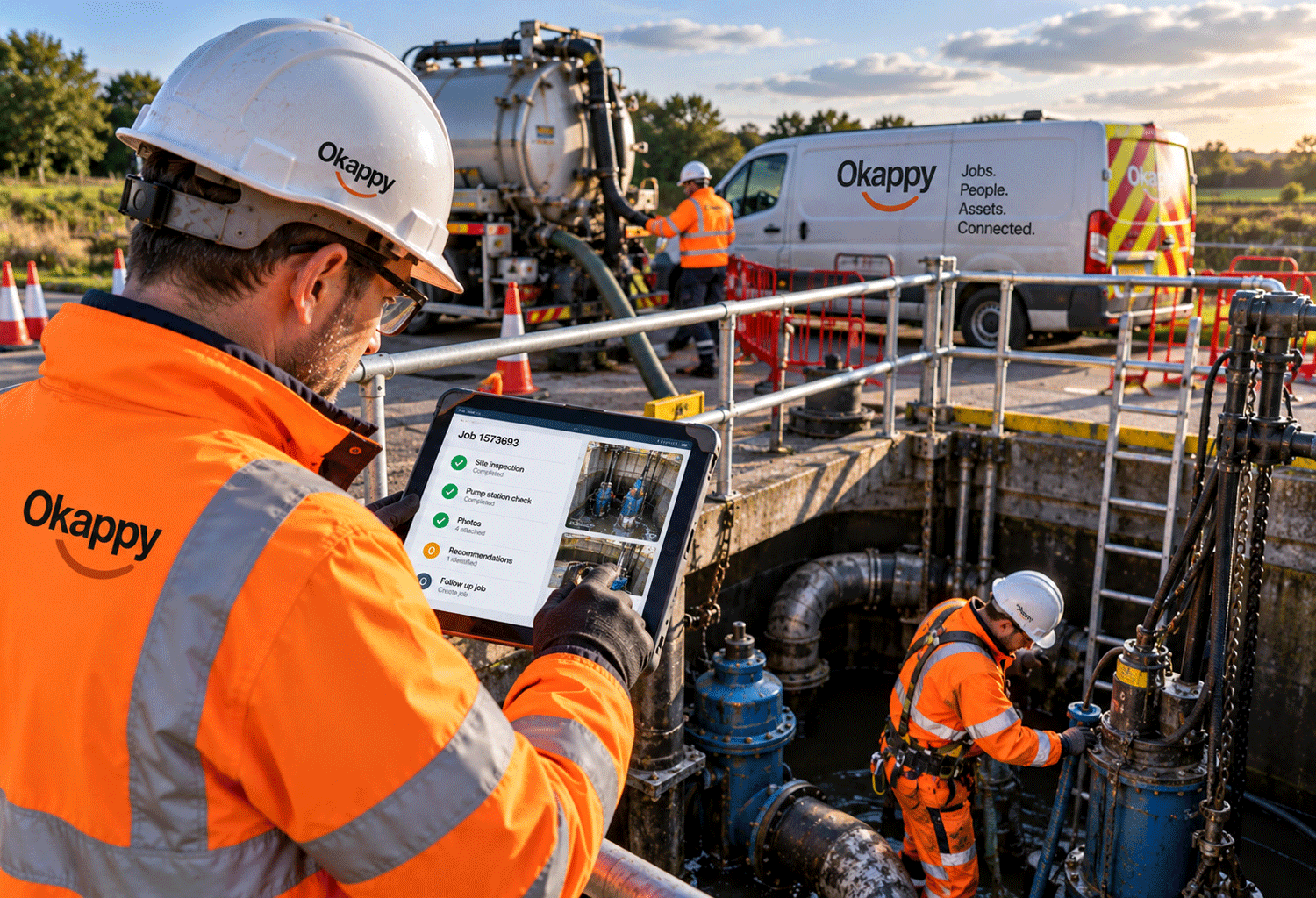
This is where location becomes more useful when it is part of your field service management system rather than another map sitting on another screen. In Okappy, location can be considered alongside the job, engineer, schedule and latest status, giving dispatchers the context they need to make a better decision.
Give customers more useful ETAs
Location, current job status and expected travel time give the office a firmer basis for an estimated arrival time. They also help staff spot when a promise needs updating. “We will update you when the engineer leaves” is more useful than another optimistic “nearly there”.
Support attendance records and operational visibility
Where appropriate, a timestamped location can support an attendance record alongside job notes, photographs and customer sign-off. It is supporting evidence, not proof that a task was completed or that someone remained on site throughout.
Managers also gain a clearer picture of how work is distributed and where travel or delays are affecting the day. Always check how recent a location is: coverage, battery life and device settings can affect updates.
Choose the right Okappy tracking approach
Okappy offers GPS and location tracking options for engineers and vehicles, so you can choose an approach that fits how your team works:
- Engineer location via mobile phones: use the Okappy iPhone or Android app to share location. This follows the phone, which may be with the engineer rather than in the van.
- Portable vehicle trackers: an option where a portable device suits your vehicle arrangements. Agree how devices will be allocated and kept powered.
- Installed vehicle trackers: an option for tracking the vehicle independently of the engineer’s phone.
Okappy allows you to configure your tracking to fit your specific requirements. That could include ongoing tracking or recording the location and timestamp when a job is updated. Discuss the setup with your team, explain its purpose and agree sensible working-hours boundaries and access to the information.
Start with the decisions you need to make
Review what you need to locate: the person, the vehicle, or equipment that can be removed from it. Then decide who will use the information, how current it needs to be and what action they will take.
For security, check the hardware, monitoring and recovery arrangements. For daily operations, connect location with the work that needs doing. The aim is a better-informed office, less unnecessary travel and fewer customers left wondering where their engineer has got to.
Explore Okappy’s GPS tracking and location options today and find the right approach for your engineers, vehicles and working day.