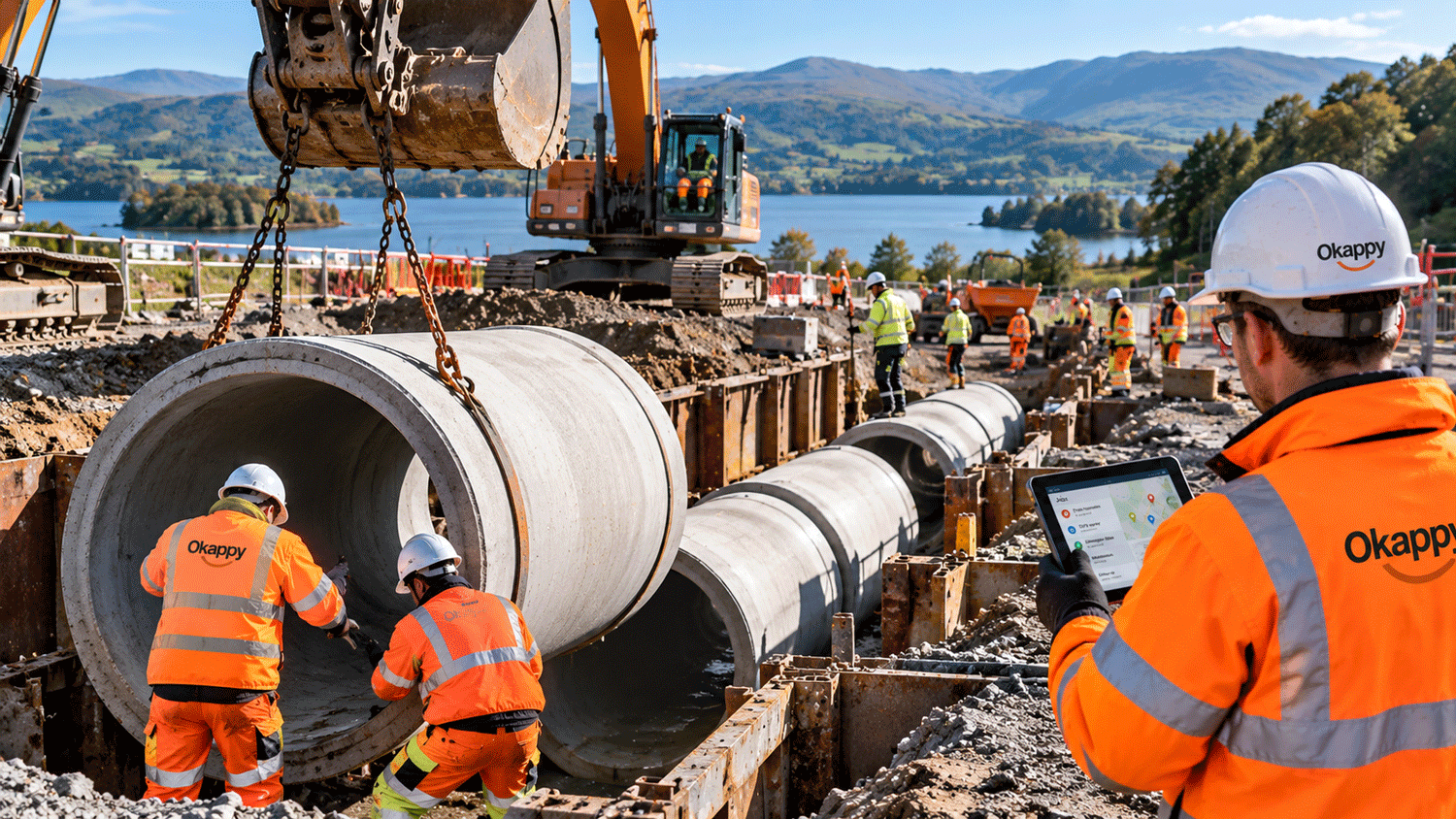
The scale of investment being proposed for Britain’s wastewater infrastructure is extraordinary. This week, a coalition including United Utilities, the Environment Agency and local stakeholders unveiled proposals for a £3.6 billion to £3.7 billion transformation of the wastewater network surrounding Windermere.
The ambition is to create a system where only rainwater enters England’s largest natural lake, protecting its environment while providing the infrastructure needed to support local communities and businesses for generations. The proposals include up to 138km of new sewers, 35km of highway runoff interception, 37 hectares of sustainable drainage and extensive underground tunnelling.
For the drainage industry, however, the significance extends beyond the engineering involved. Projects of this scale raise an important operational question: how do organisations coordinate thousands of individual activities across multiple contractors, specialist teams and locations while maintaining control over costs, progress and quality?
A £3.7bn vision for Windermere
Published on 21 October, the Only Rainwater into Windermere feasibility study examined more than 70 potential solutions before identifying two preferred approaches. Both involve intercepting wastewater currently entering the lake and transferring it through new infrastructure for advanced treatment elsewhere.
The study estimates that the preferred solutions could generate approximately £7.5 billion in economic, environmental and social benefits, with construction expected to take around seven years following detailed design, planning and regulatory approvals. These remain proposals rather than an approved construction programme, with funding arrangements and further development still to be agreed.
Nevertheless, the scale of the ambition is significant. On 23 October, Construction Enquirer reported that United Utilities was preparing a major design and integration procurement potentially worth up to £600 million, with a formal tender notice expected in November. The project illustrates the growing complexity of wastewater infrastructure investment and the opportunities this creates for contractors throughout the supply chain.
Major projects depend on thousands of smaller jobs
When discussing a multibillion-pound infrastructure programme, attention naturally focuses on the major engineering elements: tunnels, pipelines, pumping stations and treatment works. But delivering these projects involves an enormous number of individual activities, from surveys, inspections, site investigations and asset assessments before construction begins to drainage diversions, CCTV surveys, pumping operations, excavation, cleaning, testing and commissioning during delivery.
Many of these activities depend on other work being completed first. A CCTV survey might identify a collapsed section of pipe requiring additional investigation, an excavation could reveal unexpected infrastructure, or a pumping operation may need to be rescheduled because another contractor has not completed preparatory work.
Individually, these are familiar challenges for drainage businesses. Across hundreds of locations and multiple organisations, however, the complexity increases considerably, making the ability to coordinate activities efficiently an important part of successful project delivery.
The challenge of managing multiple contractors
Large infrastructure programmes rarely operate through a single contractor employing everyone involved. Instead, they depend on networks of principal contractors, specialist subcontractors, regional service providers and equipment suppliers. Each organisation brings different expertise, but they also bring its own systems, processes and reporting requirements.
A principal contractor might use one platform to manage the overall project, while drainage specialists use separate job-management systems. Subcontractors may receive instructions by email, record work on mobile devices and submit completion reports through customer portals. This creates opportunities for information to become fragmented.
A project manager may know that a particular activity has been scheduled without knowing whether the subcontractor has accepted it. An engineer might identify additional work, but that recommendation may not reach the team responsible for arranging the next stage.
The challenge is not necessarily a lack of communication. It is that communication often depends on people manually transferring information between organisations. For larger contractors, improving these connections can reduce administrative overhead and make it easier to manage growing volumes of work.
Connecting the operational supply chain
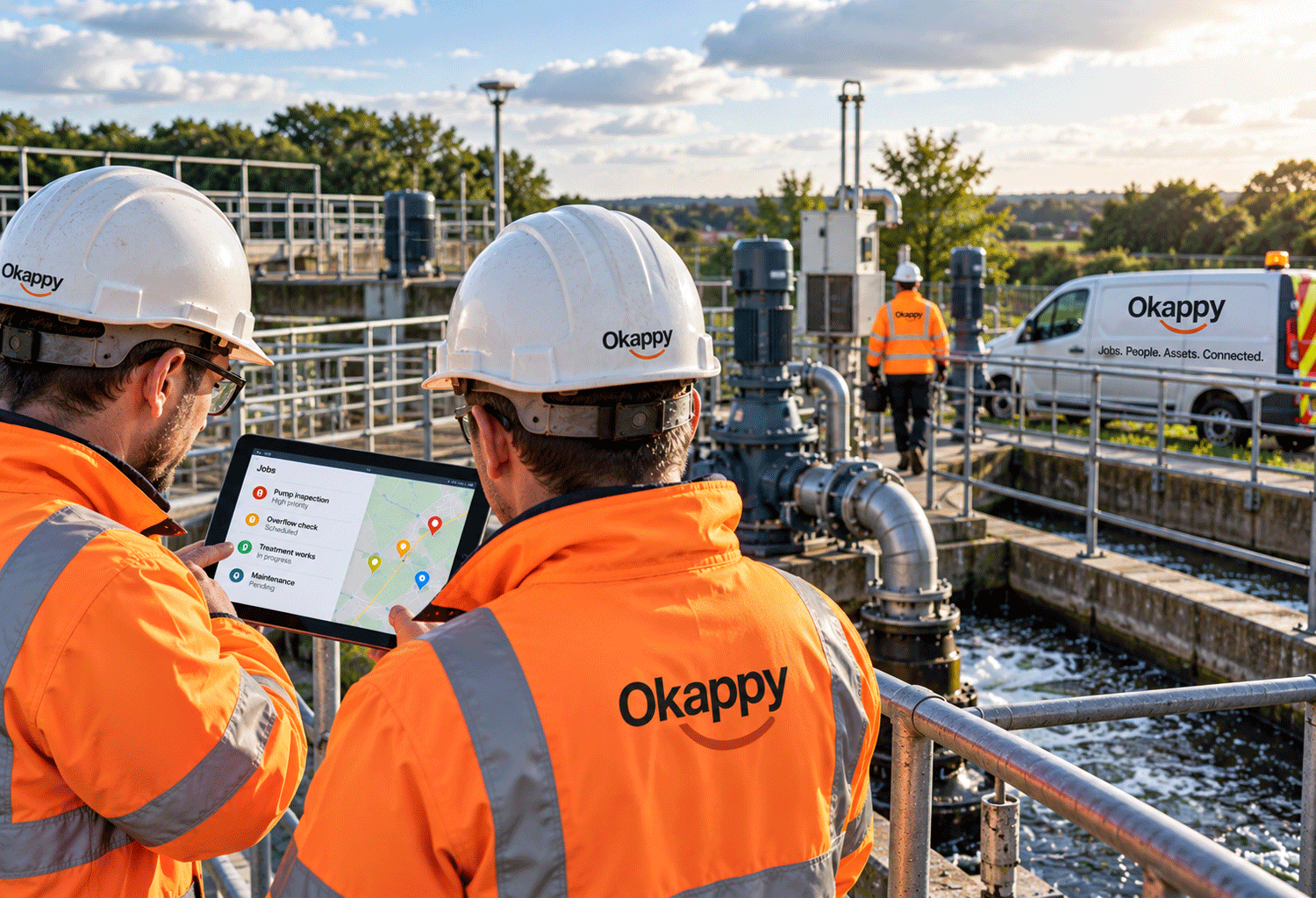
This is where connected field-service management can complement traditional project-management systems. A project-management platform might establish the overall programme, budgets, milestones and dependencies, while a connected field-service system focuses on the operational activities required to deliver that programme.
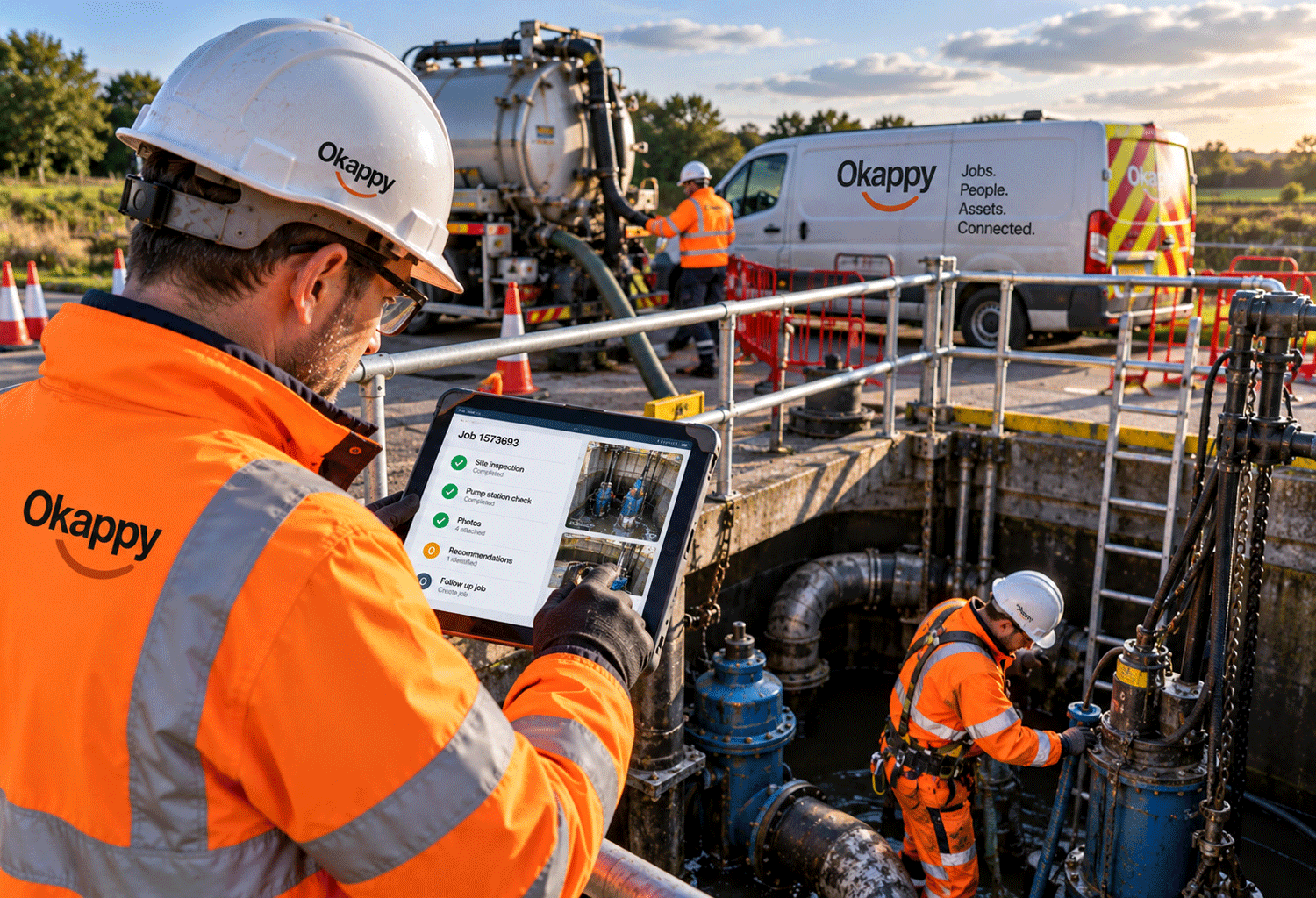
For example, a principal contractor could allocate drainage surveys to a specialist company, which then schedules engineers to attend individual sites. As jobs progress, information can be captured against each activity, including attendance, photographs, findings, completion details and recommendations. Rather than relying entirely on telephone calls and emails, the organisations involved can maintain visibility of the work being undertaken.
Okappy has been developed around this connected approach, enabling customers, contractors and subcontractors to exchange jobs and operational updates. For larger organisations managing extensive supply chains, this provides an opportunity to reduce duplicated administration while improving coordination.
Why the pressure to deliver efficiently is increasing
The Windermere announcement comes at a time when the water industry is facing increasing scrutiny over the cost and effectiveness of infrastructure investment. On 23 October, the Guardian reported that the Environment Secretary had written to water companies and regulators, emphasising the importance of affordability, value for money and early intervention to prevent leaks and sewage discharges.
The direction is significant for contractors delivering work under AMP8 and preparing for future investment programmes. Water companies need infrastructure improvements, but they must also demonstrate that investment is being managed effectively. For contractors, this increases the importance of productivity, efficient resource allocation and avoiding unnecessary administration.
A business managing hundreds of engineers and subcontractors cannot simply keep adding office staff whenever its workload increases. It needs processes capable of supporting more activity without a corresponding increase in administrative costs.
Better coordination can reduce wasted journeys
One practical opportunity is improving how work is scheduled and allocated. Consider a drainage contractor delivering surveys and maintenance across a large geographical area. Without good coordination, engineers may travel to sites that are not ready, specialist equipment may arrive before it is needed or separate teams may visit the same location unnecessarily.
These problems can create additional costs and delays. Connected job-management systems can help organisations coordinate attendance, share updates and provide engineers with the information required before arriving on site.
For businesses working across national contracts, even relatively small improvements in scheduling efficiency can become significant when multiplied across thousands of jobs. The objective is not simply to complete individual activities faster, but to reduce the friction between them.
AI could help manage the complexity
Artificial intelligence offers further opportunities, particularly when large volumes of information are moving between organisations. An AI agent could potentially interpret incoming work requests, identify the relevant site and prepare a job for allocation. It could also help operations teams identify outstanding activities, summarise engineer recommendations or retrieve information about previous visits.
For example, a project manager might want to identify every inspection completed within a particular area that recommended additional remedial work. Traditionally, answering that question could involve reviewing numerous job sheets or manually compiling information from different contractors. With connected operational data and appropriate AI capabilities, much of that process could potentially be automated.
Okappy is developing AI agents to support job creation, scheduling, operational queries and administrative workflows. However, AI is only part of the solution. The underlying information still needs to be accurate, accessible and connected to the relevant jobs and organisations.
Building infrastructure is only the beginning
There is another important consideration when looking at major wastewater investment programmes. Once new infrastructure has been constructed, it must be operated, inspected and maintained. Pumping stations require servicing, pipelines need inspections and drainage systems must be monitored for deterioration or blockages.
The Windermere proposals envisage infrastructure designed to serve the region for the next century. This means long-term operational management will be just as important as the initial construction. For drainage contractors, this creates opportunities extending beyond capital projects into planned maintenance, asset inspections and ongoing specialist services.
Organisations capable of maintaining accurate asset histories and connecting maintenance activities across their supply chains will be better positioned to support these long-term requirements.
The opportunity for larger drainage organisations
The proposed Windermere programme illustrates the scale of investment that could transform the UK’s wastewater infrastructure over the coming years. But the wider opportunity for drainage contractors is not limited to participating in individual construction projects. It is about developing the operational capability to deliver complex programmes consistently across multiple locations and organisations.
That means coordinating subcontractors, improving scheduling, maintaining reliable records and ensuring information flows efficiently between the people responsible for delivering the work. Major infrastructure programmes will always require engineering expertise, specialist equipment and substantial investment.
Increasingly, they will also depend on the ability to connect the thousands of smaller activities that make successful delivery possible. For larger drainage organisations, improving that connectivity could be one of the most valuable investments they make.