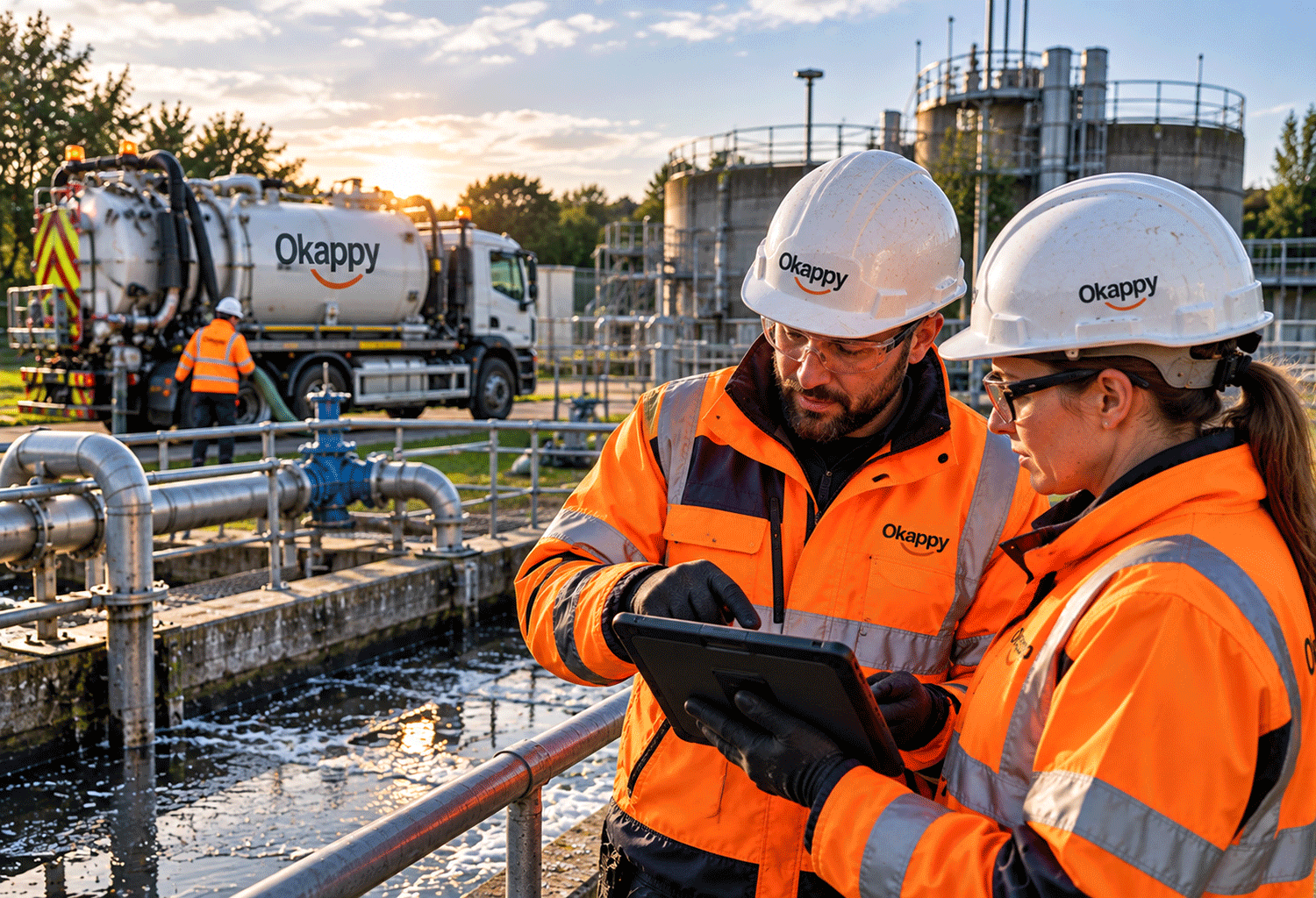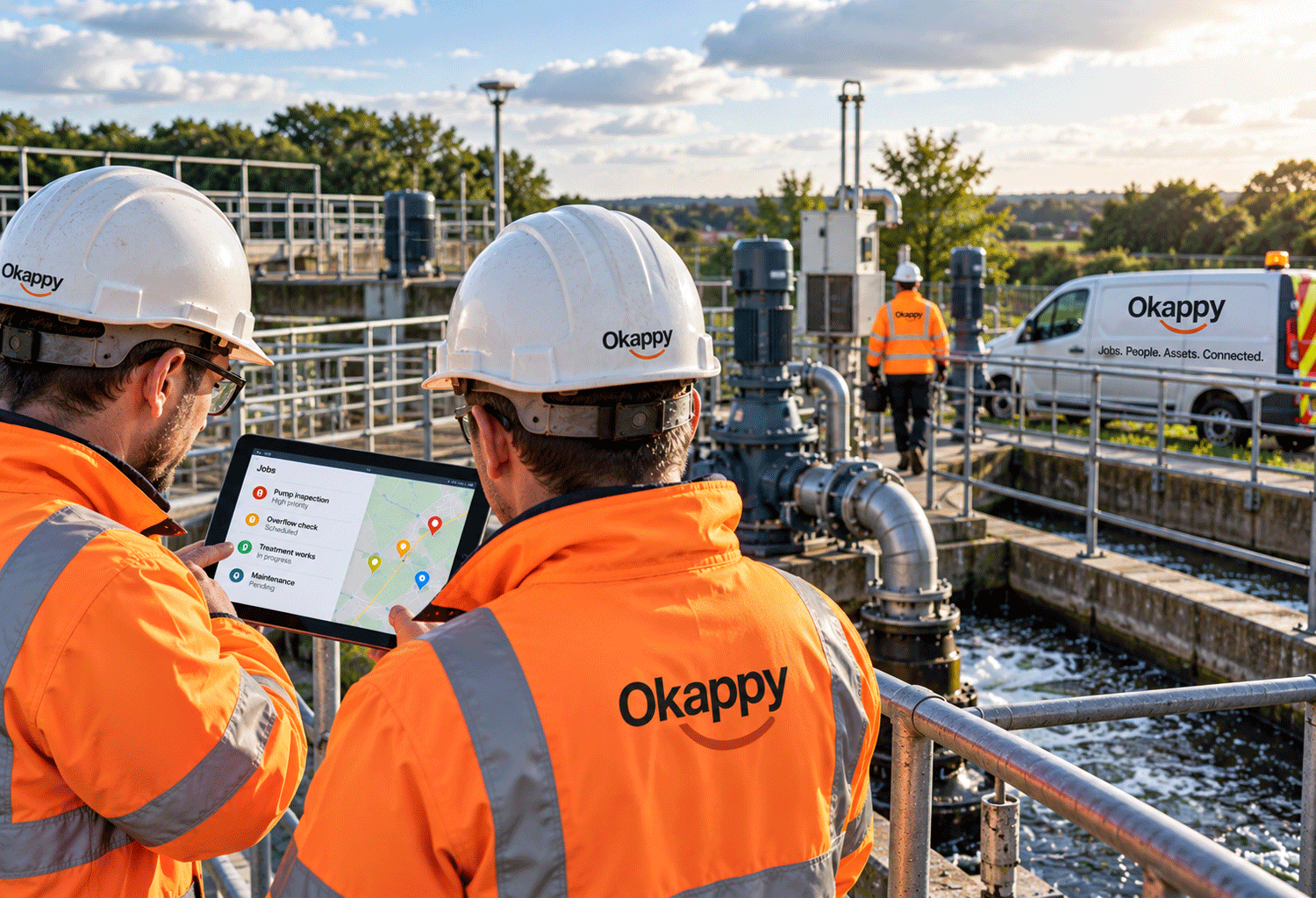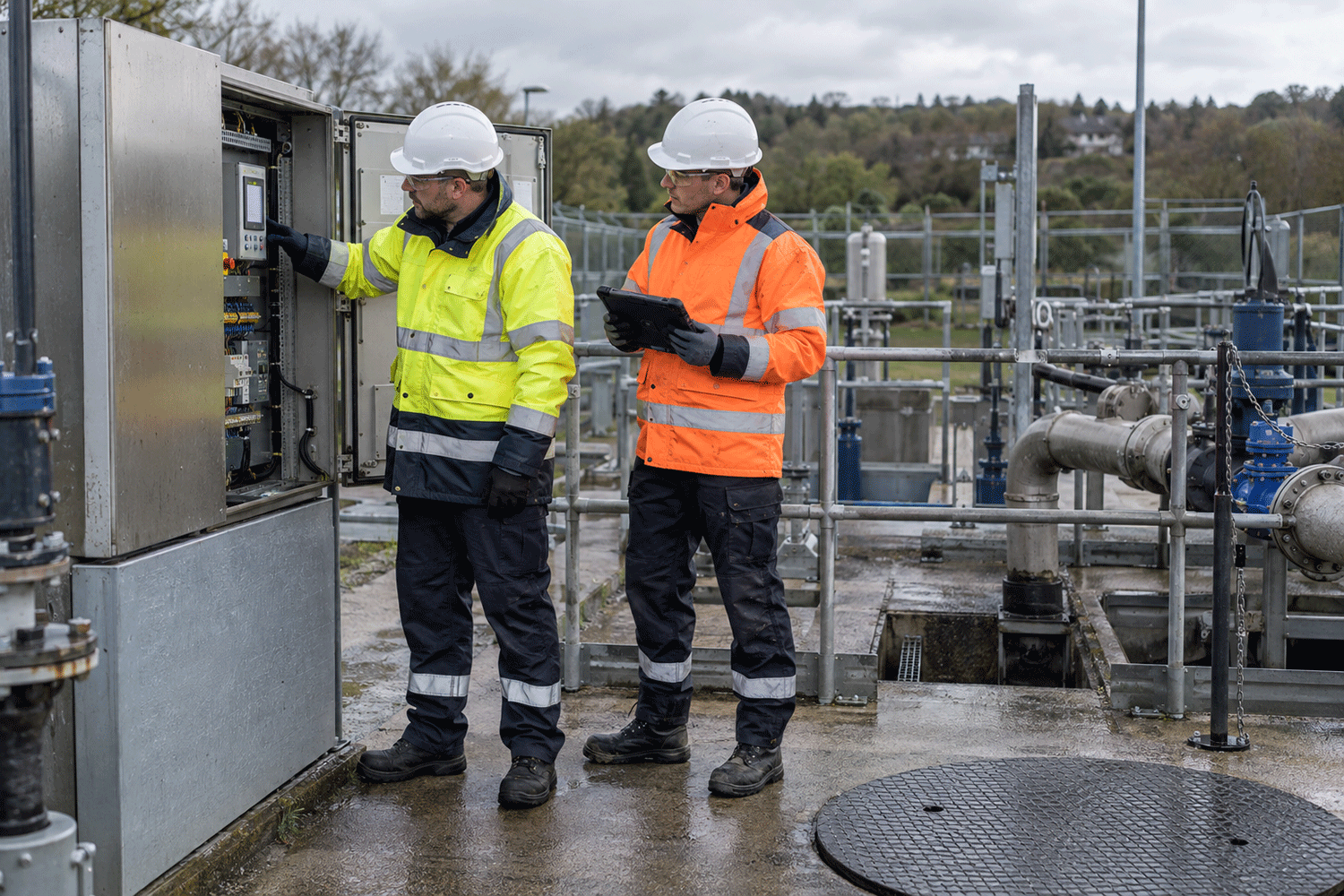
A drainage asset fails. An alarm is raised. Someone needs to assess the problem, decide how serious it is, allocate the right engineers and potentially mobilise specialist contractors.
If the problem involves wastewater, every hour can matter.
This week’s news provides a stark illustration of what can happen when wastewater infrastructure fails. United Utilities has been fined almost £1 million following a major sewage pollution incident affecting the Lancashire coast. The incident followed the partial collapse of an effluent pipe at Fleetwood wastewater treatment works and ultimately resulted in sewage being discharged from pumping stations over approximately 35 hours.
The Environment Agency classified the incident as Category 1, its most serious classification for environmental harm.
For the wider drainage industry, the case highlights an increasingly important issue. Preventing every asset failure may be impossible. But organisations need to be able to detect problems, mobilise resources, manage their response and demonstrate exactly what happened.
From reactive maintenance to operational response
Drainage has always been a reactive industry.
- Blocked sewers.
- Collapsed pipes.
- Failed pumps.
- Flooded properties.
- Engineers dispatched.
Problem resolved.
But larger organisations increasingly need something more sophisticated than that.
Consider what happens when an important wastewater asset fails. An alert may initially come from a monitoring system. Someone needs to understand what that alert means. A job needs to be created. It needs to be prioritised correctly. The appropriate engineer or contractor needs to be identified. They need the right information before arriving. If additional equipment such as tankers or jetting units is required, those resources need coordinating. Management may need updates. The customer may need updates. Environmental or regulatory reporting may also be required.
What initially looks like an engineering problem quickly becomes an information-management problem.
The audit trail matters
After a serious incident, one of the most important questions is inevitably:
What happened?
That question quickly becomes more detailed.
- When was the problem first identified?
- Who received the alert?
- When was a job raised?
- What priority was assigned?
- Who was notified?
- When did somebody attend?
- What did they find?
- What action did they take?
- Was the issue escalated?
- Were additional contractors required?
- What photographs or other evidence were captured?
- When was the customer updated?
- When was the problem resolved?
If that information is spread across emails, WhatsApp messages, spreadsheets, paper job sheets and several different systems, reconstructing the incident can become extremely difficult.
A digital operational record changes that. Each activity becomes part of the history of the job.
Monitoring is becoming more sophisticated
The water industry is already investing heavily in identifying problems earlier. Yorkshire Water, for example, is expanding its predictive condition-monitoring programme to cover another 1,500 assets. Of those, 1,200 are wastewater sewage pumping-station assets.
The technology monitors electrical signals from equipment and uses them to identify changes that may indicate developing mechanical or electrical problems. The objective is simple. Identify a problem before the asset fails.
This represents an important shift from reactive to predictive maintenance. But identifying the problem is only the first step. Someone still needs to do something about it.
Closing the gap between detection and action
This is where operational systems become particularly important.
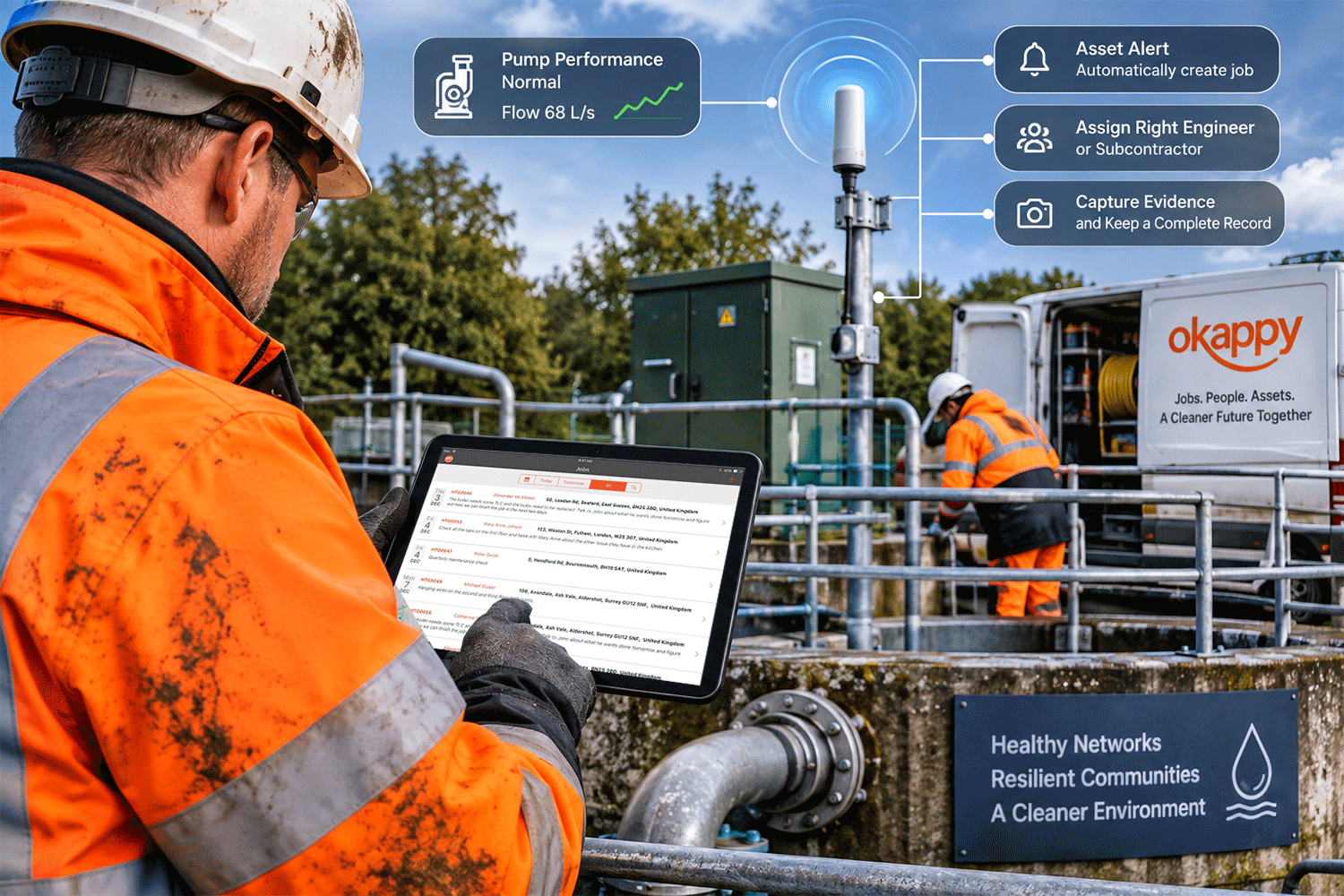
Imagine an intelligent monitoring system identifies that a pump is showing characteristics associated with an impending failure. Ideally, that shouldn’t simply generate another email for somebody to read. It could trigger an operational workflow.
- An alert creates a job.
- The asset information is attached automatically.
- The system identifies the appropriate engineer or contractor.
- The job is prioritised.
- The engineer receives the information.
- They attend and record their findings.
- If additional work is required, that work is raised immediately.
- Management retains visibility throughout the process.
The value isn’t simply in detecting the problem. It is in connecting detection to action.
AI can help manage the information
Artificial intelligence potentially adds another layer.
Larger drainage organisations process enormous amounts of unstructured information. Emails. Engineer notes. Customer requests. Photographs. Inspection results. Job sheets. Monitoring alerts.
Historically, people have had to interpret much of that information manually. AI agents can increasingly assist.
An incoming customer email can be interpreted and converted into a draft job. An alert can be assessed alongside information about the asset. Engineer notes can be reviewed to identify whether follow-up work has been recommended. Completed jobs can be checked for missing information. Operational managers can be alerted to jobs requiring attention.
The objective isn’t to replace the engineer or operations manager. It is to reduce the possibility that important information gets lost amongst thousands of routine activities.
Managing subcontractors during an incident
The challenge becomes greater when several organisations are involved.
Larger drainage companies frequently rely on specialist subcontractors. A main contractor may receive the original instruction but allocate the physical work to another organisation. That organisation may then send one of its own engineers.
Traditional subcontractor management can create an information gap. The main contractor knows the job has been issued but may have little visibility until the subcontractor provides an update. During routine work, that is inefficient. During a serious incident, it can become a significant operational risk.
Connected job management provides a different model. The job can pass between organisations while status information flows back through the same network. The main contractor can see whether the job has been accepted, allocated and attended without continually phoning or emailing the subcontractor.
Manage by exception
This becomes increasingly important as organisations grow.
A manager responsible for 20 jobs can probably understand what is happening with each of them. A manager responsible for 2,000 cannot. They need to manage by exception.
- Which critical jobs haven’t been accepted?
- Which engineers haven’t arrived?
- Which assets have repeatedly failed?
- Which jobs contain recommendations that haven’t been actioned?
- Which subcontractor is missing response targets?
- Which incidents require escalation?
Technology should help answer these questions rather than simply provide a digital version of a filing cabinet.
Regulation increases the importance of evidence
The regulatory environment makes all of this increasingly important. Water companies face intense scrutiny over pollution, sewage discharges and the condition of wastewater infrastructure. At the same time, AMP8 is bringing unprecedented levels of investment into improving networks and treatment infrastructure. That pressure inevitably flows through the supply chain.
Main contractors need evidence from specialist contractors. Water companies need evidence from main contractors. Regulators need evidence from water companies.
Being able to demonstrate what happened therefore becomes part of delivering the service.
From field service management to operational assurance
This is why field service technology is evolving.
The original objective of job management software was often relatively straightforward: replace the paper job sheet. For larger organisations, the requirement is now much broader. They need operational assurance. They need confidence that when something happens, the right process follows.
- A request becomes a job.
- A job gets allocated.
- An engineer responds.
- The work is documented.
- Recommendations create follow-up actions.
- Exceptions are escalated.
- And there is an audit trail showing the complete sequence of events.
Platforms such as Okappy can help connect customers, office teams, employees and subcontractors so that information flows with the job rather than becoming fragmented between organisations. AI and automation can then increasingly help identify the activities requiring human attention.
What happens when something goes wrong?
No drainage organisation can guarantee that an asset will never fail. Pipes collapse. Pumps break. Equipment malfunctions. Unexpected conditions occur.
The more important question for an Operations Director may therefore be:
What happens in our organisation when something does go wrong?
- Can you identify it quickly?
- Can you get the right people there?
- Can you see what is happening?
- Can you escalate when necessary?
- Can you ensure recommended actions are followed through?
- And six months later, can you produce a complete record showing exactly what happened?
As regulatory scrutiny increases and drainage operations become more connected, those capabilities are becoming increasingly important. Because preventing failures is only part of operational excellence. The other part is proving that when something went wrong, your organisation responded in the right way.